

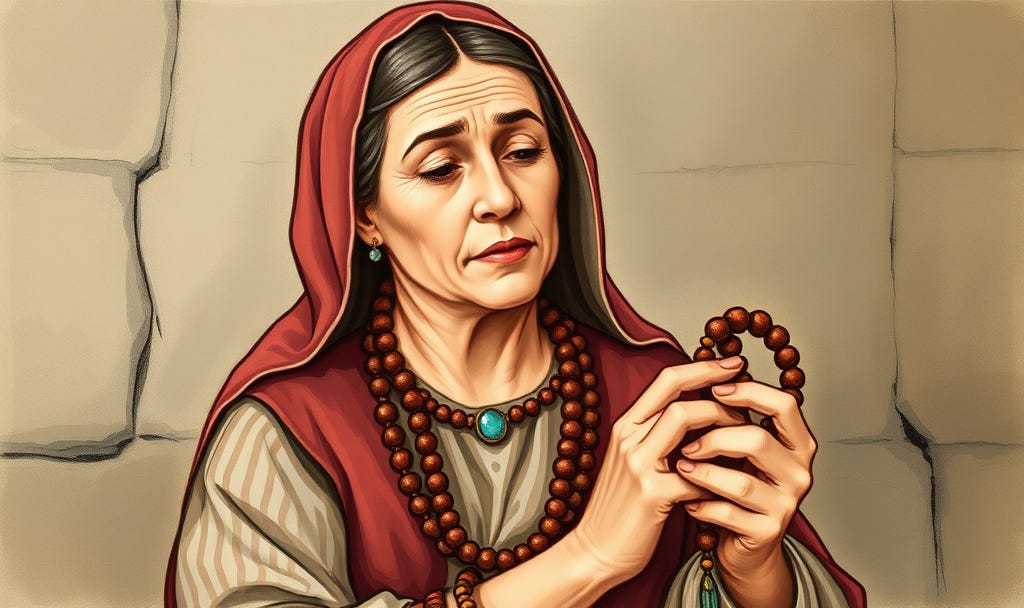
A progressive politician with a theory is like a peasant woman at her weekday Mass. Both are using tools to access grace. The difference is, the peasant woman isn’t superstitious.
Dr. Ignaz Semmelweis made a novel observation: women die much less frequently in labor if doctors wash their hands before delivering the baby.
But he couldn’t explain why (that would require Louis Pasteur). He just reported the factual findings and urged doctors to wash their hands after taking their pre-op bowel movement.
The Austro-Hungarian medical establishment rejected his findings because he didn’t have a theory to explain the phenomenon. He was mocked and his findings ignored. He suffered a nervous breakdown, was institutionalized, and beaten by the guards, dying fourteen days later in the same medical institution (the one with the nasty-ass hands) that he railed against in his writing.
The modern mindset cherishes ruminations of the left hemisphere like my burnout friend in high school cherished his dented and dinged ‘78 Camaro. Those left-hemispheric ruminations are called “theories.” Because the modern mind elevates them to the level of religious faith, it can scarcely function without them, which is why Semmelweis’ colleagues kept delivering babies with their nasty-ass hands.
Thing is, theories tend to be more dented and dinged than my friend’s Camaro. And just as I couldn’t tell my proud friend that his Camaro was, you know, kind of a piece of shit, you can’t tell a politician that his theory reeks.
And like my friend who terrorized the town with his car, contemptuous of anyone who didn’t appreciate the beauty of his roaring engine (muffler removed to better rattle the peaceful), the politician terrorizes society with his theories, contemptuous of anyone who doesn’t see the goodness of his legislation (humility removed to better rattle the peaceful).
You shouldn’t start thinking that theories are the problem. They’re not. Theories aren’t any more harmful than daydreams. They’re just things our minds come up with, more ineffectual and inconsequential than a guy trying to have sex with his car (I think my friend tried).
The problem is intervention.
Intervention is to theory what prayers and devotions are to the Church. You can have all the store of grace in the heavens, but without prayer, they tend to sit there. You can have the best theories in the world, but without intervention, they never leave the rationalist mind.
The politician intervenes in his effort to bring theories, with all their dents and dings that he doesn’t even notice, into society. The priest does a similar thing in his efforts to bring grace into the world through the sacraments and that peasant woman does too, through her devotions.
The difference is, the priest and the peasant woman aren’t looking to force any worldly change. Sure, petitions and intentions are a big part of devotions and a peasant woman who starts lighting candles in hopes of smiting that big-racked bitch next door who her husband keeps leering at is veering into superstition, but intentions, properly practiced, are just that: petitions. . . requests. Not commands. It’s the difference between soliciting the divine with “please” and thundering, “do it now!”
The latter is the essence of superstition: soliciting something divine (God or apotheosized theories) to bend the worldly to one’s will. It’s the sin of Simon Magus; it’s the sin of druid priests, voodoo doctors, and Jedi knights.
And of most modern politicians.